
Reviewed by: Dr. Jeffrey LaGrasso, MD
If you have been training hard and eating clean but your chest still looks soft or puffy, you are not alone, and it is not necessarily a lack of discipline. The answer to how to get rid of man boobs depends on one question: is the fullness caused by fat, by glandular breast tissue, or by both? Exercise and weight loss can reduce excess chest fat, but they cannot remove glandular tissue. In that case, gynecomastia surgery is the only treatment that delivers a permanent, flatter chest.
This guide explains the difference, what lifestyle changes can realistically achieve, and when it makes sense to speak with a board-certified plastic surgeon.
What are “man boobs”?
“Man boobs” is the everyday term for enlarged male breasts. Medically, there are two distinct conditions behind it:
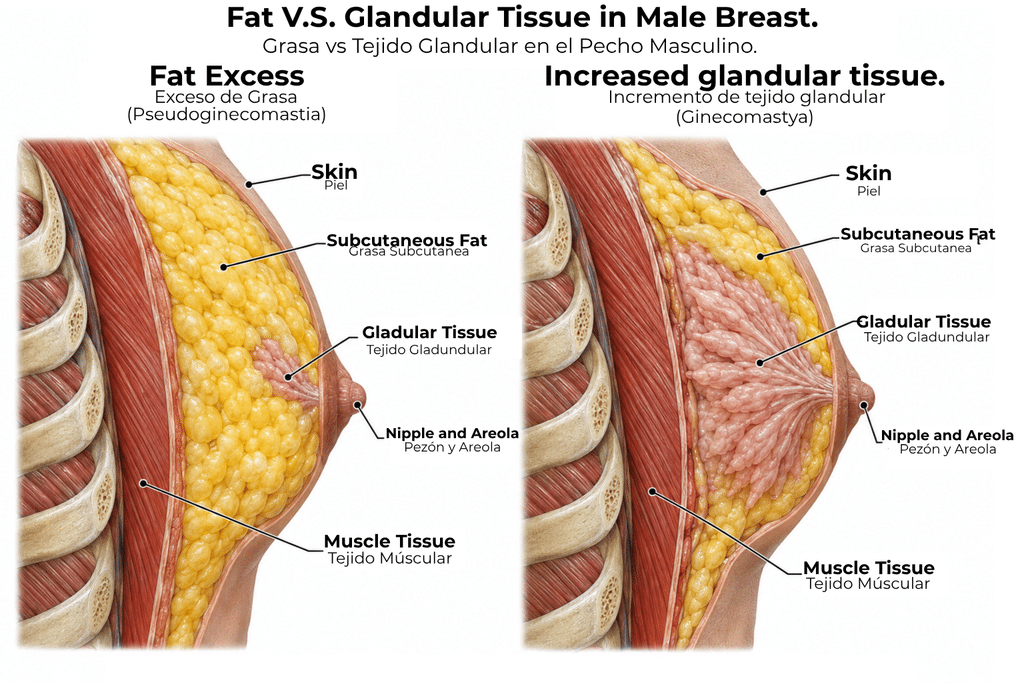
- Pseudogynecomastia: excess fat deposited in the chest. The tissue feels soft and usually improves as overall body fat decreases.
- True gynecomastia: an overgrowth of glandular breast tissue, often felt as a firm, rubbery disc beneath the nipple and areola. Diet and exercise do not eliminate it.
Many men have a combination of both, which is why results from weight loss alone are often partial.
What causes gynecomastia?
Gynecomastia is most often linked to an imbalance between estrogen and testosterone. Common contributors include:
- Puberty: hormonal shifts during adolescence frequently cause temporary breast enlargement, which often resolves on its own.
- Aging: testosterone levels naturally decline with age, changing the hormonal balance.
- Medications and substances: certain prescription drugs, anabolic steroids, and some recreational substances are associated with breast tissue growth.
- Medical conditions: liver or kidney disease, thyroid disorders, and low testosterone (hypogonadism) can play a role.
- Excess body weight: fat tissue converts testosterone into estrogen, which can contribute to both fat and gland growth.
- Genetics: some men are simply predisposed to it.
If you notice a new, hard lump on only one side, nipple discharge, or changes to the skin of the chest, see a physician promptly. These signs should be evaluated to rule out other conditions.
Can exercise get rid of man boobs?
Exercise helps, but only with fat. It is not possible to spot-reduce fat from the chest by doing more push-ups. Fat loss happens across the whole body, and the chest is often one of the last areas to change.
What exercise can do is reduce overall body fat and build the pectoral muscles underneath, which gives the chest a firmer, more defined shape. An effective routine combines three elements:
- Strength training for the chest and upper body: bench press (flat and incline), dumbbell flyes, push-ups, dips, and cable crossovers, two to three times per week.
- Full-body compound movements: squats, deadlifts, and rows increase calorie expenditure and support healthy testosterone levels.
- Cardiovascular training: brisk walking, cycling, swimming, or interval training most days of the week to support a calorie deficit.
If your chest becomes more muscular but the area around the nipple remains puffy or firm, that is a strong sign of glandular tissue, which training will not remove.
How much does weight loss help?
For men with pseudogynecomastia, losing excess weight is the most effective non-surgical step. A sustainable calorie deficit, adequate protein, limited alcohol, and fewer ultra-processed foods all support fat loss and a healthier hormonal profile.
There are two limits worth knowing. First, weight loss does not shrink glandular tissue. Second, after significant weight loss, some men are left with loose chest skin that no exercise can tighten. In both cases, surgery is what completes the result.
Are there medical treatments for gynecomastia?
When gynecomastia is caused by an underlying condition or a medication, treating that cause may stop or reverse it, especially when the enlargement is recent. This should always be managed by a physician; never stop a prescribed medication on your own.
Once gynecomastia has been present for a long time, the tissue typically becomes fibrous and no longer responds to medication. Creams, supplements, and compression shirts sold online may improve how clothes fit, but they do not remove breast tissue.
When is gynecomastia surgery the right option?
Gynecomastia surgery, also called male breast reduction, is the most reliable way to correct enlarged male breasts permanently. You may be a good candidate if:
- Your chest has not improved after reaching a stable, healthy weight
- You have a firm area of tissue beneath the nipple
- You have finished puberty
- You are in good general health and do not smoke
- You have realistic expectations about the outcome
How is gynecomastia surgery performed?
The technique is tailored to what is causing the fullness:
- Liposuction: removes excess fat through small incisions. Ideal when the enlargement is mostly fat.
- Glandular excision: removes firm breast tissue, usually through a discreet incision along the lower edge of the areola.
- Skin removal and reshaping: in more advanced cases, excess skin is removed and the areola may be reduced or repositioned for a more masculine contour.
Most patients benefit from a combination of liposuction and excision. At My Cosmetic Surgery in Miami, gynecomastia surgery is performed by board-certified surgeons Dr. Jeffrey LaGrasso and Dr. Fabian Fontaine who design each plan around the patient’s anatomy and goals.
What is recovery like?
Recovery from gynecomastia surgery is generally manageable. Patients wear a compression vest to reduce swelling and support the new chest contour. Most men return to desk work within about one week and resume strenuous exercise after several weeks. The improvement is visible right away, and the final result becomes clear over the following months as swelling resolves.
Because glandular tissue is removed, results are long-lasting. Maintaining a stable weight and avoiding substances linked to gynecomastia helps preserve them.
Frequently asked questions (fAQ)
Push-ups strengthen the chest muscles, but they cannot remove fat or glandular tissue from a specific area. They work best as part of a full routine combined with overall fat loss.
Fat feels soft and is spread evenly across the chest. Glandular tissue feels firm or rubbery and sits directly beneath the nipple. A plastic surgeon can confirm the diagnosis during a physical exam.
Gynecomastia that appears during puberty often resolves on its own. In adults, especially when it has been present for more than a year or two, it rarely disappears without treatment.
Yes. The removed glandular tissue does not grow back. Significant weight gain, steroid use, or certain medications can cause new enlargement.
Incisions are small and usually placed along the edge of the areola or in natural creases, where they fade and become difficult to notice over time.
Take the next step toward a flatter, more defined chest
If diet and training have not given you the chest you are working toward, the cause may be tissue that exercise cannot reach. Schedule a consultation with My Cosmetic Surgery in Miami to find out whether you have gynecomastia and which treatment fits your goals. Call (305) 264-9636 or visit us at 7360 Coral Way, Suite 11, Miami, FL 33155.