Labiaplasty

Labiaplasty | Overview
Procedure Details
| Type | Surgical: reduction or reshaping of the labia minora; a clitoral hood or labia majora reduction can be added. |
| Anesthesia | Local anesthesia with sedation. |
| Duration | Around 1 to 2 hours, depending on the technique and any added procedures. |
| Hospital stay | Outpatient: same-day discharge. |
| Areas treated | Labia minora and labia majora. |
| Return to work | Around 1 week for desk jobs. |
| Exercise, sex and tampons | After 4 to 6 weeks, once your surgeon clears you. |
| Final results | Most swelling resolves by 6 weeks; final result at 3 to 6 months. |
| Price | The final quote will be confirmed at consultation based on the technique and any combined procedures. |
| Financing | Available through Cherry Financing and Alphaeon. |
| Consultation | Free |
THE PROCEDURE
What is a labiaplasty and how is it performed?
A labiaplasty is a surgical procedure that reduces the length or changes the shape of the labia minora so they sit at or just inside the labia majora. It is the most common aesthetic genital surgery in the United States. It is performed as an outpatient procedure under local anesthesia with sedation or general anesthesia and generally takes 1 to 2 hours. Your surgeon marks the tissue to be removed, reshapes the labia with the trim or wedge technique, and closes the incisions with dissolvable stitches. The technique is chosen with you during your free consultation, based on your anatomy and the look you want.
→ General anesthesia vs. local anesthesia: which is the best option?
Why do women choose labiaplasty?
Visible inner labia are completely normal, and their size and shape vary widely from woman to woman. Labiaplasty is for women whose labia cause physical discomfort or affect how they feel about their body. The most common reasons are:
- Pain, chafing or pinching during cycling, running, spinning or horseback riding
- Twisting and tugging in leggings, swimsuits and tight jeans
- Irritation, itching or difficulty keeping the area clean
- Discomfort or pain during sex
- Asymmetry, when one side is noticeably longer than the other
- Feeling self-conscious in a bathing suit or with a partner
Labia can lengthen or stretch with puberty, pregnancy and childbirth, hormonal changes around menopause, weight changes and genetics.
Will I have scars, and where will they be?
Yes, but they are usually hard to see once healed. With the trim technique, the scar runs along the new edge of the labia minora, where it blends with the natural border. With the wedge technique, a fine line crosses the labia where the two edges are joined, and the natural edge is preserved. Genital tissue heals quickly and the incisions are closed with dissolvable stitches, so scars typically soften and fade over the following 3 to 6 months.
Does labiaplasty affect sensation or sex?
Labiaplasty does not cut or move the nerves of the clitoris. Research has found no significant change in sensation, lubrication or orgasm after labiaplasty for most women, and many say sex is more comfortable afterward because tissue no longer pinches or pulls. You will need to wait 4 to 6 weeks, until your surgeon clears you, before resuming sexual activity.
TECHNIQUES AND ALTERNATIVES
What labiaplasty techniques exist, and which do we offer?
The technique determines where the scar sits, whether your natural labial edge is kept, and which areas can be treated. Here is how the options compare:
| Technique | What it involves | Do we offer it? | Best suited for |
|---|---|---|---|
| Trim (edge) labiaplasty | Removes excess tissue along the outer edge of the labia minora and closes the edge with dissolvable stitches. | YES | Long labia, or dark or uneven edges the patient wants removed. |
| Wedge labiaplasty | Removes a V-shaped section from the middle of each labium and joins the two edges. | YES | Patients who want to keep their natural edge and its color. |
| Clitoral hood reduction | Removes excess folds of skin around the clitoral hood; often done with a labiaplasty. | NO | Extra hood skin that looks bulky once the labia minora are reduced. |
| Labia majora reduction (majoraplasty) | Removes excess, sagging skin from the outer lips. | YES | Stretched or sagging outer lips after weight loss, pregnancy or with age. |
| Labia majora fat transfer or filler | Add volume to the outer lips with your own fat or hyaluronic acid filler. | YES | Outer lips that have lost fullness. |
Trim or wedge: which one is right for me?
Both are well-established techniques; the right one depends on your anatomy and the look you want:
| Trim labiaplasty | Wedge labiaplasty | |
|---|---|---|
| Removes | Tissue along the outer edge | A V-shaped section from the middle |
| Natural edge | Replaced by a new, smooth edge | Preserved, including its color and texture |
| Best for | Longer labia and a “clean” look | A natural look with the original edge |
| Main risk | Removing too much tissue | The incision separating as it heals |
| How common | The most common technique | The second most common technique |
Your surgeon will examine your anatomy during your consultation and recommend the technique, or a combination, that suits you best.
CANDIDACY
Who is a good candidate for labiaplasty?
A good candidate for labiaplasty is 18 or older, in good general health, and bothered by the size, shape or asymmetry of her labia, whether because of physical discomfort or how they look. Candidates should be non-smokers, or willing to stop smoking before and after surgery, and have realistic expectations: the goal is labia that feel comfortable and look natural, not identical to a picture. The decision should be your own, not someone else’s. Your surgeon will confirm whether you are a candidate during your free consultation.
→ What makes you a good candidate for cosmetic surgery
Can I have a labiaplasty if I plan to have children?
Your body needs time to recover from pregnancy and delivery before surgery. Recommendations vary, but surgeons commonly advise waiting 6–12 months after childbirth to allow swelling to resolve and the tissues to heal and stabilize. Your surgeon will assess your recovery, breastfeeding status, and medications to determine the right timing for you. Do not stop prescribed medications unless your healthcare provider advises you to.
Can I have a labiaplasty if I smoke?
Smoking should be stopped at least a month before surgery and for a month afterward. Nicotine constricts blood vessels and reduces circulation, which slows healing and raises the risk of the incision opening, especially with the wedge technique.
Can labiaplasty be combined with other procedures?
Yes. Common combinations include:
- Tummy tuck (abdominoplasty), often as part of a post-pregnancy plan
- Liposuction of the abdomen, flanks or mons pubis
- Breast lift, as part of a full mommy makeover
The right combination is decided at your consultation, based on your health and the total time required in the operating room.
MEDICAL TEAM AND SAFETY
Is my consultation private?
Yes. You will meet one-on-one with your surgeon in a private exam room, and a female staff member can be present if you prefer. Your photos and medical information are never shared without your written consent. Consultations are available in English and Spanish.
What are the risks of a labiaplasty?
Like any surgery, labiaplasty carries risks, although serious complications are uncommon. The most common include:
- Swelling and bruising, which peak in the first few days and can last a couple of weeks
- Bleeding or a collection of blood under the skin (hematoma)
- Infection at or around the incision
- Wound separation, when part of the incision opens as it heals; slightly more likely with the wedge technique
- Removing too much tissue, the most common complication reported by the American Society of Plastic Surgeons, which can cause dryness, scarring near the vaginal opening or pain with sex
- Removing too little tissue or asymmetry, which may need a small revision
- Scarring, tenderness or changes in sensation
Less common but more serious risks include:
- Blood clots (deep vein thrombosis)
- Reactions to anesthesia
- Ongoing pain or pain during sex
At My Cosmetic Surgery, we follow all the Florida Health Safety Guidelines to keep these risks to a minimum, and our surgeons take a conservative approach to tissue removal.
PREPARATION AND RECOVERY
How do I prepare for surgery?
Stop smoking and nicotine products at least a month before and after surgery, since they slow healing. Aspirin, anti-inflammatory drugs, vitamin E, fish oil and some herbal supplements may increase bleeding and should be paused only with your surgeon’s authorization. Arrange for a responsible adult to drive you home and stay with you the first night. Before surgery, have ready loose cotton underwear, maxi pads, ice packs, a squeeze (peri) bottle for rinsing, and a stool softener to avoid straining.
→ Requirements before your surgery
→ Medications you should avoid before surgery
What does recovery look like week by week?
Days 1–3: Swelling, bruising and soreness are at their peak and are managed with prescribed medication. Rest with your hips slightly raised, apply ice 20 minutes on and 20 minutes off, and expect light spotting.
Days 4–7: Soreness eases. Most patients return to desk work around the end of the first week. Keep wearing loose clothing and a pad.
Weeks 2–3: Bruising fades and the stitches start to dissolve. Walking is encouraged; avoid sitting for long periods and anything that rubs the area.
Weeks 4–6: Most swelling has gone down. Cleared for exercise, cycling, swimming, sex and tampons once your surgeon confirms healing.
Months 3–6: The remaining swelling resolves and scars soften. This is when you see your final result.
How do I care for the area while it heals?
- Rinse with lukewarm water from a squeeze bottle after using the bathroom, and pat dry; no soap on the incisions.
- Apply ice packs over your underwear, 20 minutes on and 20 minutes off, for the first 2 to 3 days.
- Wear loose clothing and cotton underwear, with a pad for light spotting.
- Drink water and eat fiber to avoid constipation and straining.
- Avoid baths, pools, beach and hot tubs until your surgeon clears you.
→ Post-surgery care for a successful recovery
When can I return to work, exercise and sex?
Most patients with desk jobs return within about 1 week; jobs that involve standing, walking or lifting may need 2 weeks. Walking is encouraged from the first days, while running, cycling, spinning, swimming, sex and tampons are typically cleared between weeks 4 and 6, once your surgeon confirms healing is on track.
→ When can I resume sexual activity after cosmetic surgery?
RESULTS
When will I see my final results?
You will notice a smaller, more even shape right after surgery, but swelling masks the full result at first. Most swelling resolves by about 6 weeks, and final results are typically visible at 3 to 6 months, once the tissue has fully settled and the scars have softened.
How long do the results last?
The tissue removed during a labiaplasty does not grow back, so results are long-lasting. However, a future vaginal delivery, significant weight changes and aging can stretch the labia again over time.
Will my labia look perfectly symmetrical?
Labiaplasty can greatly improve symmetry, but natural bodies are never perfectly identical from side to side. The goal is labia that look balanced and natural, and your surgeon will explain what is realistic for your anatomy at consultation.
COST AND LOGISTICS
How much does a labiaplasty cost in Miami, and do you offer financing?
Because the final price depends on the technique and whether a clitoral hood or labia majora reduction is added, your exact quote is confirmed during your free consultation with our coordinators. Financing is available through Cherry Financing and Alphaeon.
→ Payment options at My Cosmetic Surgery
If I’m traveling from another city, how many days should I stay in Miami?
At My Cosmetic Surgery, we recommend planning enough time in Miami for your initial recovery and at least one postoperative follow-up before flying home. Our team will confirm the exact timeline for your case at consultation for at least 2 weeks.
→ Free remote evaluation for cosmetic surgery in Miami
Schedule your consultation
Book a free consultation with My Cosmetic Surgery to discuss your goals, review your medical history, and find out which labiaplasty technique is right for you. Call us at (305) 264-9636 to schedule your consultation.
Why you'll love it
Overview
Procedure Details
| Type | Surgical: reduction or reshaping of the labia minora; a clitoral hood or labia majora reduction can be added. |
| Anesthesia | Local anesthesia with sedation. |
| Duration | Around 1 to 2 hours, depending on the technique and any added procedures. |
| Hospital stay | Outpatient: same-day discharge. |
| Areas treated | Labia minora and labia majora. |
| Return to work | Around 1 week for desk jobs. |
| Exercise, sex and tampons | After 4 to 6 weeks, once your surgeon clears you. |
| Final results | Most swelling resolves by 6 weeks; final result at 3 to 6 months. |
| Price | The final quote will be confirmed at consultation based on the technique and any combined procedures. |
| Financing | Available through Cherry Financing and Alphaeon. |
| Consultation | Free |
THE PROCEDURE
What is a labiaplasty and how is it performed?
A labiaplasty is a surgical procedure that reduces the length or changes the shape of the labia minora so they sit at or just inside the labia majora. It is the most common aesthetic genital surgery in the United States. It is performed as an outpatient procedure under local anesthesia with sedation or general anesthesia and generally takes 1 to 2 hours. Your surgeon marks the tissue to be removed, reshapes the labia with the trim or wedge technique, and closes the incisions with dissolvable stitches. The technique is chosen with you during your free consultation, based on your anatomy and the look you want.
→ General anesthesia vs. local anesthesia: which is the best option?
Why do women choose labiaplasty?
Visible inner labia are completely normal, and their size and shape vary widely from woman to woman. Labiaplasty is for women whose labia cause physical discomfort or affect how they feel about their body. The most common reasons are:
- Pain, chafing or pinching during cycling, running, spinning or horseback riding
- Twisting and tugging in leggings, swimsuits and tight jeans
- Irritation, itching or difficulty keeping the area clean
- Discomfort or pain during sex
- Asymmetry, when one side is noticeably longer than the other
- Feeling self-conscious in a bathing suit or with a partner
Labia can lengthen or stretch with puberty, pregnancy and childbirth, hormonal changes around menopause, weight changes and genetics.
Will I have scars, and where will they be?
Yes, but they are usually hard to see once healed. With the trim technique, the scar runs along the new edge of the labia minora, where it blends with the natural border. With the wedge technique, a fine line crosses the labia where the two edges are joined, and the natural edge is preserved. Genital tissue heals quickly and the incisions are closed with dissolvable stitches, so scars typically soften and fade over the following 3 to 6 months.
Does labiaplasty affect sensation or sex?
Labiaplasty does not cut or move the nerves of the clitoris. Research has found no significant change in sensation, lubrication or orgasm after labiaplasty for most women, and many say sex is more comfortable afterward because tissue no longer pinches or pulls. You will need to wait 4 to 6 weeks, until your surgeon clears you, before resuming sexual activity.
TECHNIQUES AND ALTERNATIVES
What labiaplasty techniques exist, and which do we offer?
The technique determines where the scar sits, whether your natural labial edge is kept, and which areas can be treated. Here is how the options compare:
| Technique | What it involves | Do we offer it? | Best suited for |
|---|---|---|---|
| Trim (edge) labiaplasty | Removes excess tissue along the outer edge of the labia minora and closes the edge with dissolvable stitches. | YES | Long labia, or dark or uneven edges the patient wants removed. |
| Wedge labiaplasty | Removes a V-shaped section from the middle of each labium and joins the two edges. | YES | Patients who want to keep their natural edge and its color. |
| Clitoral hood reduction | Removes excess folds of skin around the clitoral hood; often done with a labiaplasty. | NO | Extra hood skin that looks bulky once the labia minora are reduced. |
| Labia majora reduction (majoraplasty) | Removes excess, sagging skin from the outer lips. | YES | Stretched or sagging outer lips after weight loss, pregnancy or with age. |
| Labia majora fat transfer or filler | Add volume to the outer lips with your own fat or hyaluronic acid filler. | YES | Outer lips that have lost fullness. |
Trim or wedge: which one is right for me?
Both are well-established techniques; the right one depends on your anatomy and the look you want:
| Trim labiaplasty | Wedge labiaplasty | |
|---|---|---|
| Removes | Tissue along the outer edge | A V-shaped section from the middle |
| Natural edge | Replaced by a new, smooth edge | Preserved, including its color and texture |
| Best for | Longer labia and a “clean” look | A natural look with the original edge |
| Main risk | Removing too much tissue | The incision separating as it heals |
| How common | The most common technique | The second most common technique |
Your surgeon will examine your anatomy during your consultation and recommend the technique, or a combination, that suits you best.
CANDIDACY
Who is a good candidate for labiaplasty?
A good candidate for labiaplasty is 18 or older, in good general health, and bothered by the size, shape or asymmetry of her labia, whether because of physical discomfort or how they look. Candidates should be non-smokers, or willing to stop smoking before and after surgery, and have realistic expectations: the goal is labia that feel comfortable and look natural, not identical to a picture. The decision should be your own, not someone else’s. Your surgeon will confirm whether you are a candidate during your free consultation.
→ What makes you a good candidate for cosmetic surgery
Can I have a labiaplasty if I plan to have children?
Your body needs time to recover from pregnancy and delivery before surgery. Recommendations vary, but surgeons commonly advise waiting 6–12 months after childbirth to allow swelling to resolve and the tissues to heal and stabilize. Your surgeon will assess your recovery, breastfeeding status, and medications to determine the right timing for you. Do not stop prescribed medications unless your healthcare provider advises you to.
Can I have a labiaplasty if I smoke?
Smoking should be stopped at least a month before surgery and for a month afterward. Nicotine constricts blood vessels and reduces circulation, which slows healing and raises the risk of the incision opening, especially with the wedge technique.
Can labiaplasty be combined with other procedures?
Yes. Common combinations include:
- Tummy tuck (abdominoplasty), often as part of a post-pregnancy plan
- Liposuction of the abdomen, flanks or mons pubis
- Breast lift, as part of a full mommy makeover
The right combination is decided at your consultation, based on your health and the total time required in the operating room.
MEDICAL TEAM AND SAFETY
Is my consultation private?
Yes. You will meet one-on-one with your surgeon in a private exam room, and a female staff member can be present if you prefer. Your photos and medical information are never shared without your written consent. Consultations are available in English and Spanish.
What are the risks of a labiaplasty?
Like any surgery, labiaplasty carries risks, although serious complications are uncommon. The most common include:
- Swelling and bruising, which peak in the first few days and can last a couple of weeks
- Bleeding or a collection of blood under the skin (hematoma)
- Infection at or around the incision
- Wound separation, when part of the incision opens as it heals; slightly more likely with the wedge technique
- Removing too much tissue, the most common complication reported by the American Society of Plastic Surgeons, which can cause dryness, scarring near the vaginal opening or pain with sex
- Removing too little tissue or asymmetry, which may need a small revision
- Scarring, tenderness or changes in sensation
Less common but more serious risks include:
- Blood clots (deep vein thrombosis)
- Reactions to anesthesia
- Ongoing pain or pain during sex
At My Cosmetic Surgery, we follow all the Florida Health Safety Guidelines to keep these risks to a minimum, and our surgeons take a conservative approach to tissue removal.
PREPARATION AND RECOVERY
How do I prepare for surgery?
Stop smoking and nicotine products at least a month before and after surgery, since they slow healing. Aspirin, anti-inflammatory drugs, vitamin E, fish oil and some herbal supplements may increase bleeding and should be paused only with your surgeon’s authorization. Arrange for a responsible adult to drive you home and stay with you the first night. Before surgery, have ready loose cotton underwear, maxi pads, ice packs, a squeeze (peri) bottle for rinsing, and a stool softener to avoid straining.
→ Requirements before your surgery
→ Medications you should avoid before surgery
What does recovery look like week by week?
Days 1–3: Swelling, bruising and soreness are at their peak and are managed with prescribed medication. Rest with your hips slightly raised, apply ice 20 minutes on and 20 minutes off, and expect light spotting.
Days 4–7: Soreness eases. Most patients return to desk work around the end of the first week. Keep wearing loose clothing and a pad.
Weeks 2–3: Bruising fades and the stitches start to dissolve. Walking is encouraged; avoid sitting for long periods and anything that rubs the area.
Weeks 4–6: Most swelling has gone down. Cleared for exercise, cycling, swimming, sex and tampons once your surgeon confirms healing.
Months 3–6: The remaining swelling resolves and scars soften. This is when you see your final result.
How do I care for the area while it heals?
- Rinse with lukewarm water from a squeeze bottle after using the bathroom, and pat dry; no soap on the incisions.
- Apply ice packs over your underwear, 20 minutes on and 20 minutes off, for the first 2 to 3 days.
- Wear loose clothing and cotton underwear, with a pad for light spotting.
- Drink water and eat fiber to avoid constipation and straining.
- Avoid baths, pools, beach and hot tubs until your surgeon clears you.
→ Post-surgery care for a successful recovery
When can I return to work, exercise and sex?
Most patients with desk jobs return within about 1 week; jobs that involve standing, walking or lifting may need 2 weeks. Walking is encouraged from the first days, while running, cycling, spinning, swimming, sex and tampons are typically cleared between weeks 4 and 6, once your surgeon confirms healing is on track.
→ When can I resume sexual activity after cosmetic surgery?
RESULTS
When will I see my final results?
You will notice a smaller, more even shape right after surgery, but swelling masks the full result at first. Most swelling resolves by about 6 weeks, and final results are typically visible at 3 to 6 months, once the tissue has fully settled and the scars have softened.
How long do the results last?
The tissue removed during a labiaplasty does not grow back, so results are long-lasting. However, a future vaginal delivery, significant weight changes and aging can stretch the labia again over time.
Will my labia look perfectly symmetrical?
Labiaplasty can greatly improve symmetry, but natural bodies are never perfectly identical from side to side. The goal is labia that look balanced and natural, and your surgeon will explain what is realistic for your anatomy at consultation.
COST AND LOGISTICS
How much does a labiaplasty cost in Miami, and do you offer financing?
Because the final price depends on the technique and whether a clitoral hood or labia majora reduction is added, your exact quote is confirmed during your free consultation with our coordinators. Financing is available through Cherry Financing and Alphaeon.
→ Payment options at My Cosmetic Surgery
If I’m traveling from another city, how many days should I stay in Miami?
At My Cosmetic Surgery, we recommend planning enough time in Miami for your initial recovery and at least one postoperative follow-up before flying home. Our team will confirm the exact timeline for your case at consultation for at least 2 weeks.
→ Free remote evaluation for cosmetic surgery in Miami
Schedule your consultation
Book a free consultation with My Cosmetic Surgery to discuss your goals, review your medical history, and find out which labiaplasty technique is right for you. Call us at (305) 264-9636 to schedule your consultation.
What to Expect
Let’s kick off your #madeinmcs plastic surgery journey! Our patient coordinators are here to guide you. They’ll help with paperwork, choosing the right surgeon, and even assist remotely if needed. Whether you’re close by or far away, they’ll make sure you’re all set with forms, clear instructions, and a way to send photos to your surgeon. If you’re ready to begin or have questions, feel free to reach out to us at (305) 264 – 9636 or fill in our Contact Form. Our team is excited to assist you on this exciting journey.
Following your consultations with our coordinators, you will embark on a vital stage where your aspirations align with the specialized knowledge of your chosen surgeon. This isn’t just a conversation; it’s a collaborative session where you will discuss your objectives, medical history, and craft a comprehensive plan together. We will openly and candidly address topics such as anesthesia, recovery, and any potential challenges that may arise during your journey.
Now that you’re preparing for surgery, our surgery coordinators step in. They’ll make sure everything is perfectly aligned. From scheduling the right time for your procedure to collecting essential forms, they’ll guide you. You’ll also get the full details on pre-op tests like blood work and scans, and financial details will be covered too.
Your big day is here, and we’re as excited as you! To keep things safe, we’ll ask you to skip dinner and drinks the night before – a precaution for the anesthesia. On surgery day, come in early for a thorough prep. Our skilled surgeon and team will take over from there. After surgery, our attentive medical staff will take care of you. When you’re ready, you’ll head home with a support person for a comfortable recovery.
Once the surgery lights dim, your journey to recovery begins. Follow our easy care instructions closely for optimal healing. Listen to your surgeon’s advice about changing bandages, taking care of incisions, and managing any discomfort. Don’t skip those follow-up appointments – they’re important to track your progress. Keep in mind, different procedures have different recovery timelines. Your surgeon’s expertise will guide you towards successful healing and achieving the results you desire.
Checklist
- Follow medical advice closely and prepare a proper rest area beforehand.
- No smoking a month before and after surgery.
- Avoid taking anticoagulant medications as well as consuming herbal supplements before and after surgery.
- We are an Out-Patient Clinic: meaning that none of our procedures require a hospital stay; patients can go home once they wake from anesthesia.
- Wear your surgical compression garment as indicated by your surgeon.
- Swelling and discomfort are normal after surgery but will gradually subside. Patients can typically resume daily activities after 15 days.
FAQs
Why do people consider labiaplasty?
Is labiaplasty painful?
Can I use tampons after labiaplasty?
Can the labia grow back after labiaplasty?
Is labiaplasty the same as vaginal rejuvenation?
Labiaplasty | Our Surgeons
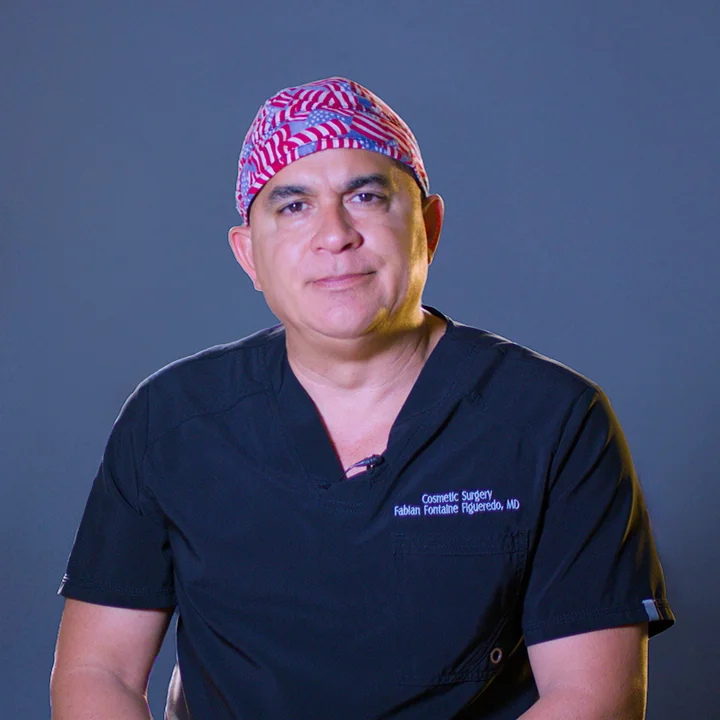
Fabian Fontaine Figueredo, MD
Board Certified Cosmetic Surgeon
#madeinmcs Journey
Let’s kick off your #madeinmcs plastic surgery journey! Our patient coordinators are here to guide you. They’ll help with paperwork, choosing the right surgeon, and even assist remotely if needed. Whether you’re close by or far away, they’ll make sure you’re all set with forms, clear instructions, and a way to send photos to your surgeon. If you’re ready to begin or have questions, feel free to reach out to us at (305) 264 – 9636 or fill in our Contact Form. Our team is excited to assist you on this exciting journey.
Following your consultations with our coordinators, you will embark on a vital stage where your aspirations align with the specialized knowledge of your chosen surgeon. This isn’t just a conversation; it’s a collaborative session where you will discuss your objectives, medical history, and craft a comprehensive plan together. We will openly and candidly address topics such as anesthesia, recovery, and any potential challenges that may arise during your journey.
Now that you’re preparing for surgery, our surgery coordinators step in. They’ll make sure everything is perfectly aligned. From scheduling the right time for your procedure to collecting essential forms, they’ll guide you. You’ll also get the full details on pre-op tests like blood work and scans, and financial details will be covered too.
Your big day is here, and we’re as excited as you! To keep things safe, we’ll ask you to skip dinner and drinks the night before – a precaution for the anesthesia. On surgery day, come in early for a thorough prep. Our skilled surgeon and team will take over from there. After surgery, our attentive medical staff will take care of you. When you’re ready, you’ll head home with a support person for a comfortable recovery.
Once the surgery lights dim, your journey to recovery begins. Follow our easy care instructions closely for optimal healing. Listen to your surgeon’s advice about changing bandages, taking care of incisions, and managing any discomfort. Don’t skip those follow-up appointments – they’re important to track your progress. Keep in mind, different procedures have different recovery timelines. Your surgeon’s expertise will guide you towards successful healing and achieving the results you desire.
Labiaplasty | Checklist
- Follow medical advice closely and prepare a proper rest area beforehand.
- No smoking a month before and after surgery.
- Avoid taking anticoagulant medications as well as consuming herbal supplements before and after surgery.
- We are an Out-Patient Clinic: meaning that none of our procedures require a hospital stay; patients can go home once they wake from anesthesia.
- Wear your surgical compression garment as indicated by your surgeon.
- Swelling and discomfort are normal after surgery but will gradually subside. Patients can typically resume daily activities after 15 days.